

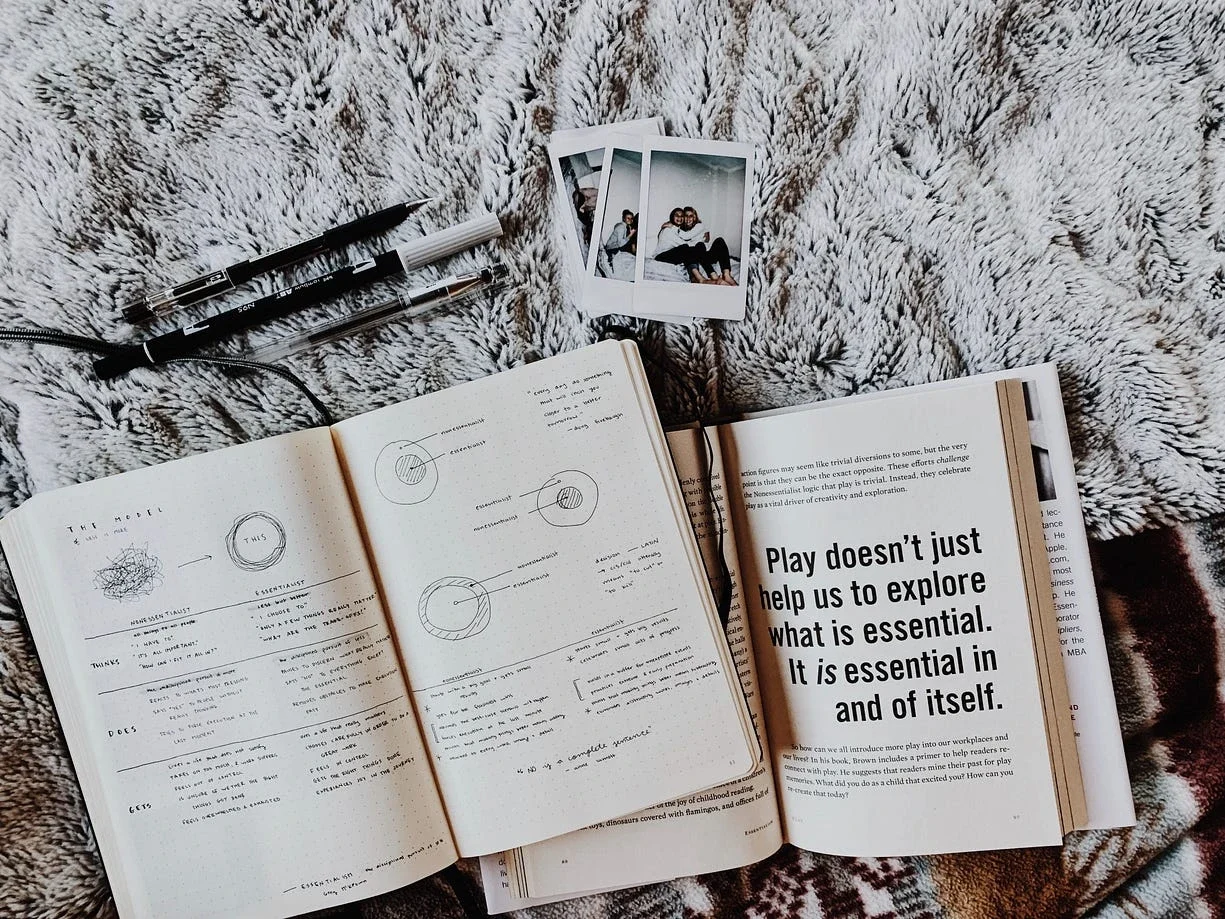
When we start to be mindful of all the situations in our life, we start to see some small changes that affect life unconditionally. We will be presented with the choices that we can’t afford to lose. And if we commit to everything, we are going to lose everything as well. This is where essentialism comes in our life and it is very important for us to make the right choices at the right time.
Being essentialist is not about a set of principles you need to follow in your life every day. It is about working ourselves to make this as our automated task like how we eat, sleep and bath. In his book Essentialism, author Greg McKeown clearly helped to understand about concentrating on things that matter the most.
To harness the power of essentialism, we need to conquer 3 assumptions and change it to essential kind. “You have to,” “everything is important,” and “you can do both.” to “I choose to,” “Only a few things really matter,” and “I can do anything but not everything.”
This transformation in our lives helps us to cut off some unnecessary thoughts. The main idea of this book is to make ourselves productive. McKeown made his thoughts and experiences quite clear in his book and while reading this book, I understand the requirement to be an essentialist. It is not just about values or principles, we need to adopt the concepts and try a few things on our own to help ourselves to make things out of them.
How to build a routine?
Find a cue that triggers your desired behavior. You can also build a new routine — find a cue of a new routine and connect it to an established habit. To make the best of it, do the hardest thing first in the morning.
Here are the few things I have noted while reading this book and a few tips to help you all understand.
How to apply minimum and extreme criteria to your decision-making process.
Write down your opportunity. Then write down three minimum and three extreme criteria this opportunity needs to pass. If it doesn’t pass the minimum, it’s no, but if it doesn’t pass at least two extreme criteria — it’s also no.
Points:
What is Essentialism and what it is for?
The core of Essentialism
Explore your options
- Think
- Observe like a journalist
- Play
- Sleep
- Select
- Saying No to Opportunities
Eliminate unimportant things
- Achieve Clarity
- Have Courage
- Uncommit
- Edit
- Build Boundaries
How to develop and maintain the effortless system to execution?
Tips:
The book provides a detailed description of the Essentialism method:
- Explore and evaluate your opportunities. Decide whether an activity will provide a maximum contribution toward your goal. You will learn how to apply criteria to filter your choices. Ask yourself, “Do I love this?”
- Eliminate activities that do not make the highest contribution. Learn to say no to be effective. It requires emotional discipline.
- Develop a system to execute activities that suit you the best. Remove the obstacles and hold on to that system, making the execution effortless.
The following tips will help you develop your inner journalist:
- Start writing in a journal. Make notes to remember important things and develop a routine to write a little on a daily basis. Read it through once every three months.
- Get out into the field and start exploring to understand a problem better and make the best contribution to fix it.
- Pay attention to details to give a different perspective of the same story.
- Remember what question you are trying to answer.”
Concentrate on removing constraints instead of focusing on the efforts.
- Know your desired outcome.
- Take time to think about the obstacles. Identify the main one that would make the majority of other obstacles disappear.
- Remove the main obstacle. If it’s a person, ask this question “What obstacles or bottlenecks are holding you back from achieving X, and how can I help remove these?
Tasks:
- Try this extreme test to filter your options. Write down your opportunity. Then write down three minimum and three extreme criteria this opportunity needs to pass. If it doesn’t pass the minimum, it’s no, but if it doesn’t pass at least two extreme criteria — it’s also no.
- Practice pausing before you speak to get those extra 5 seconds to think before you commit.
- Make a list of the moments you felt your boundaries were violated to define your deal breakers.
Conclusion:
The Essentialism approach teaches you to live a full and happy life with a clear purpose and without trivial distractions. Though it takes discipline and courage to accomplish, it’s rewarding and worth your efforts.
The way of the essentialist starts by exploring and evaluating your options. To find your life’s calling, ask yourself this tough question: “What am I deeply passionate about?” Take time to look around and gain inspiration, observe like a journalist, have a good sleep, apply tough and highly selective criteria to your options, and find time to play. Free up time to think and generate ideas when your mind isn't actively involved in anything else.
The next step is to eliminate activities that do not contribute to your life’s calling. To be productive and effective, learn to say no. Use the 90-10 model to make difficult decisions. Evaluate your decision on the most important criteria from 0 to 100 — if the score is lower than 90, say no to it.
Try this:
Develop a system to execute activities that suit you the best. Establish a routine and follow it to make the execution effortless. Remember Pareto Principle — 20% of your efforts account for 80% of your results.
If you decide to live your life as essentialist, you’ll get more control over your own life and decisions, get more clarity, more joy, and happiness, and remove stress. You will have a meaningful life and achieve your desired goals.
How to say no with the help of 90-10 model:
Think about the most important criterion and give it a score between 0 and 100. If a score is lower than 90, reject this opportunity. Applying tough and highly selective criteria is the reality of trade-offs. You would end up with saying yes to only 10 percent of opportunities.
Enjoy your life by removing the obstacle that is causing a series of them. Learn to say no and don’t commit to everything even if it seems to be feasible for you. Let’s follow and explore our options to think, play, observe, analyze, sleep, and select by eliminating unimportant things in life. This is possible when we have the courage to show for the problems, uncommit our mistakes, redoing the things we work on, and also build boundaries to have more options to explore.
Please let me know your thoughts about it and how it helped your life in eliminating unwanted things in life.