
If we look at what we did to the growth of humanity, we go as mysterious as it gets. The achievements that mankind has been doing for centuries are worth something and we always find a way to discover mysteries.
Mysteries are like particle physics, as long as we dig deep, confusing it becomes to understand more mysterious it gets to explore. I am fond of Astrophysics from the beginning of my childhood. Recently, I started to reinvent myself and in the process, I started to learn where I left off my passion in my childhood. I started to read books about physics and this article is about one of them, “Brief Answers to the Big Questions ” authored by Stephan Hawking. This is the last book of the great scientist. He gives us brief answers to think about the difficult questions we have in science. He made sure that we all understand science and experience the wonders of the universe.
Chapters:
- What’s in it for me? Find answers to our world’s most ambitious questions.
- Forces govern our universe — but a divine creator probably isn’t among them.
- We can’t logically ask the question “What came before the Big Bang?”
- There’s no easy answer to the question of alien life.
- It might be possible to predict the future — but it’s unlikely.
- Even light cannot escape a black hole — but something can.
- To survive on Earth, we need to take immediate action.
- We need to start colonizing space.
- We need to be wary of runaway AI
- Highlights from the book
- Conclusion
1. What’s in it for me? Find answers to our world’s most ambitious questions.
We have made advanced developments in the history of mankind and we have a lot of infinite questions about the mysteries that are yet to solve. In search of those answers, we need to find ourselves as, where do we come from? Are we aliens to this planet? Can we colonize any other planets in the solar system?
In this book, he discussed all these aspects and his opinions toward it. We have many great scientists around the planet who solve the greatest mathematical problems every day but we all mustn’t be using our brain to its potential not at least together.
Let’s consider this article as the summary of the book along with my opinions over it.
2. Forces govern our universe — but a divine creator probably isn’t among them.
In this chapter, the author says that we as humans overrating and underestimating the capabilities of energy. We can explain almost all phenomena but still, some go unresolved.
We believe in religion and rely on science to prove all the theories. We think God as a conscious being instead of the ultimate power. In my thoughts, I agree with the author here. He is suggesting that the forces and the universal laws are governing the universe and we human beings are minute particles compared to what’s going on in the universe. Einstein referred to these laws as Gods. There is a religious belief about eclipses, lightning, and earthquakes before but now we have witnessed how they are happening.
There are still things that human eyes can’t see and understand but as long as we pray for the power instead of God as a person, religion cannot agree to work with science. They both need to work together toward the progress of unlocking mysteries.
We must understand how the universe began and how humans are created and what made us? Is there any knowledge that is already found and lost?
3. We can’t logically ask the question “What came before the Big Bang?”
Stephan Hawking explains that our universe is a huge entity and the origin of it remains as the mystery and excitement to know. Edwin Hubble’s discovery of the theory that Universe is expanding after observing the lights from galaxies across the night skies lead to the foundation of Big Bang theory. This supports that due to singularity the explosion happened.
As we know Black holes are the mysteries object where it wraps the space-time due to its high density where even time cannot pass through it. This concludes the understanding of Big bang and what was there before it. Still, the perfect answer is unknown but we can predict that nothing was there before it. Everything started after the big bang.
My theory is different from this question even though I agree with what Stephan Hawking is suggesting. But, I can call the big bang as the reincarnation of the universe. When objects move or expand at an accelerating rate, at some point the universe may contract and when it starts to contract, all the objects start to get closer to each other and wraps the space-time because of infinite density and gravity around it. It contracts and reaches the point of singularity like black holes. This leads to an explosion that causes the universe to restart again. At the point of singularity, time loses its value and all the forces come together and reach the same energy state.
4. There’s no easy answer to the question of alien life.
Alien life is a special part of the study that we humans are trying to master. We sent spacecraft to sail out of our solar system but still, the vastness of the universe is not ready to give up its mystery. After 7 Billion years of the big bang, our planet has formed and after 2.5 Billion years of our Earth’s formation, multicellular species were formed. About 60 million years ago humans are started to born. Before that about roughly 66 million years ago, dinosaurs got extinct by an interstellar event. The crater is now called Chicxulub — The impacted area that got dinosaurs to go extinct.

Still, out of our planet there are roughly 40 billion planets live in Goldilocks Zone — A zone that is helpful to form habitable planets — Not too hot not too cold from its star. There could be a possibility that life forms have existed before our solar system was born and got extinct. Maybe there are interstellar events that caused life forms to go extinct. There are chances that life forms are still developing.
We can ask these questions all day but we can never be sure of it not until we find the real answers. That is one of the problems in science. It never accepts belief. It only demands proofs and proofs.
5. It might be possible to predict the future — but it’s unlikely.
Particle physics or quantum mechanics that deals with the study of the movement of particles based on wave functions. Before 20th century, it is believed that based on speed and position of a subject, we can predict its future and later in the 20th century, it jas been disproved for particles that lead to an uncertainty principle — you cannot measure both the speed and position of a particle simultaneously; the more accurately you measure one, the less accurately you can measure the other.
This uncertainty made to define wave function that measures the position of a particle between 2 points. This is also supported by many discoveries and disproved the predictive future. In the next generation, we need to discover more about particles to understand how to locate exactly their position based on speed.
This doesn’t hold good when we come to the point of singularity — where space-time is warped by the density of black holes. There might be a technology where we can take help from or it is not yet invented. Either way, we need to explore and learn more together to uncover these mysteries.
6. Even light cannot escape a black hole — but something can.
We all know about black holes and how this is. We may don’t have the live pictures of it but using some wonderful technologies and observations, we were able to discover black holes. They are so dense that even light cannot escape from it. The author says, if nothing can escape it and black holes are the monsters, the universe would have swallowed by them because there are millions of black holes are present in the universe.
How is this possible? Why the universe is still intact even after 13.8 billion years. There is a possibility for the black hole which dies eventually at some point like every object has its end. Hence, we use quantum mechanics to answer this. Anti-Particles is the answer.
In 1974, Stephan Hawking proposed a theory about space filled with particles and antiparticles. These particles are responsible to bind the space just like threads in our clothes. With the interaction of them, black holes lose their mass and eventually disappear.
Either something more powerful than light exists in the universe or black hole has a death plan. Anyway, the whole universe is perfectly balanced and finely tuned to sustain.
7. To survive on Earth, we need to take immediate action
This is like a civil war and world war. There are categories of destruction. One is from the interstellar or interplanetary objects and second is from us inside due to fast-growing human negligence.
We are due from an impact from the celestial body based on calculations. We have the technology to detect if something is coming to hit us from space but we don’t the technology to prevent them.
With the huge difference that humans are making to our planet’s geological conditions, we need to start learning from our mistakes if we are planning to live on this planet in the future. Due to political and economic conditions, we are not able to save the earth to stop global warming. I read this beautiful article from Asmita Karanje, about “The politics of climate change is killing us”. She researched how global level extinction is near if humans don’t take action.
One more devastating cause will be nuclear weapons. If any terrorist group gets hold of all the weapons, the present nuclear weapons can destroy our earth several times over. What if all the countries make this treaty which states nobody manufactures nuclear weapons and the existing weapons must be disarmed and destroyed? At least we can make sure one of the many catastrophes are avoided.
8. We need to start colonizing space
As we are explorers and searching for many life forms. We expect to find another home for us and build it beside our planet. We can search for the place where the atmosphere is inhabitable. We have our limitations as well, which means we can only search for these places in our solar system until the technology is developed that can propel engines faster than light (FTL engines).
In our solar system itself, we have 3 known places that can be habitable by species. We are not sure yet but things are getting uncovered. Mars and Europa (Moon of Jupiter) and Titan (Moon of Saturn) are those places where we can sail and work to colonize our humanity in our solar system.
There is a barrier for all these that politicians think that they have more bigger problems to invest money in than for these projects. Colonizing space requires huge money and to operate it. My opinion is to crowdsource the funding for these kinds of projects. Out of 7 Billion people, each of them donates for this cause, we can get 7 Billion dollars to work on. This helps funding to get easy and we as humans can move forward.
We can collect 1 dollar from every human being every year. So, 7 Billion per year is a deal for space colonization.
9. We need to be wary of runaway AI
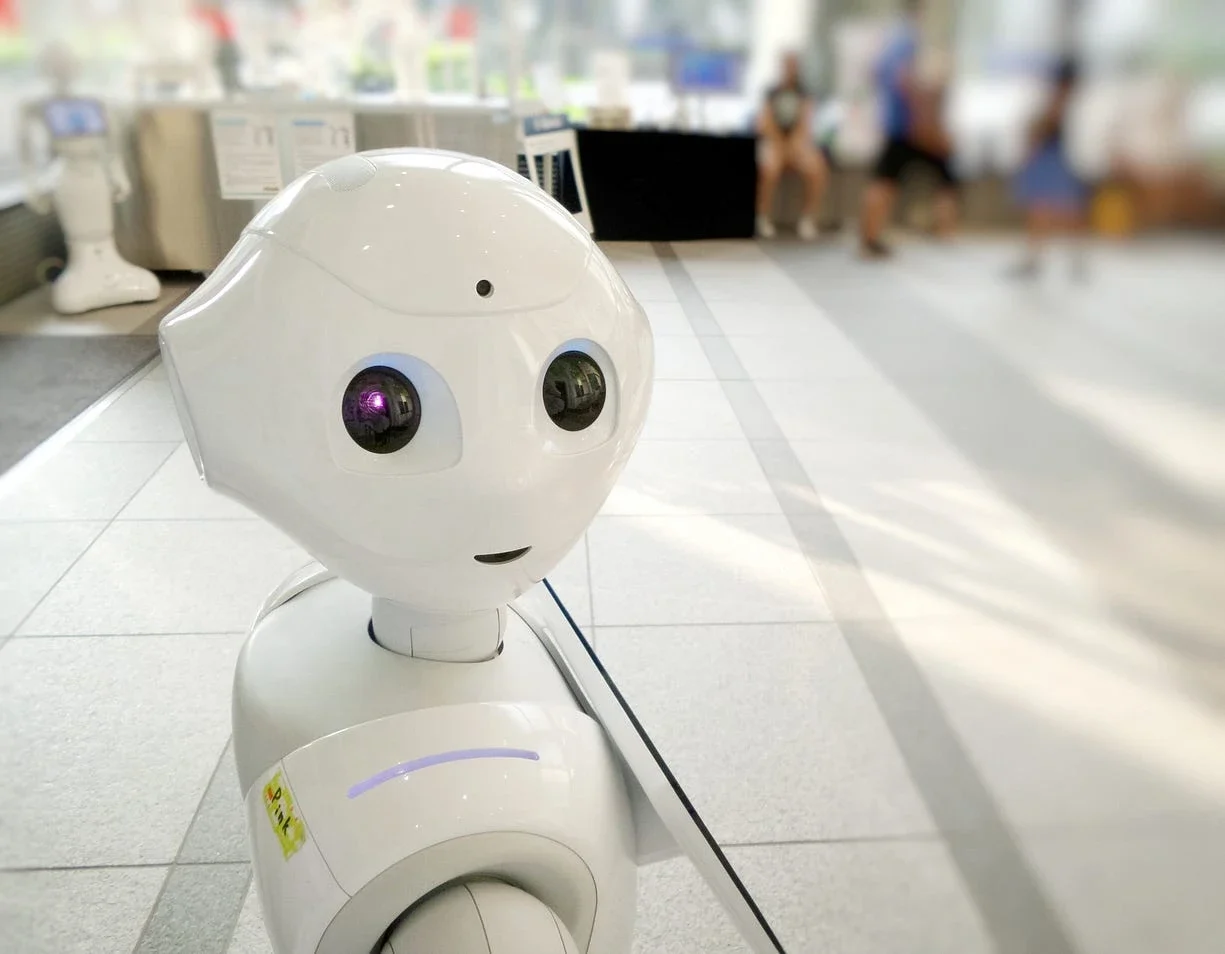
There are many movies and books are written about AI and there is a possibility that it can go rogue. Again this is in the hands of human beings. We are unique and far more intelligent than any other species. When we can come together, we can do wonderful things and invent breakthroughs. Now our mind is far more advanced than any other computer that human has build. But, in the last 50 years, the growth of computers and the internet is exponentially increasing. According to Moore’s law, it is improving at double speeds. If this improves for the next 100 years, AI can surpass the human brain with its computational abilities. When it grows to that level, we will be the inferior species.
Taking precautions while developing Artificial Intelligence is a must and we have to make sure it should always be a friend to human beings instead of a foe.
10. Highlights from the book:
- Science and religion both offer answers to these fundamental questions, but come to radically different conclusions. One argues there is inherent meaning in human life, the other that our existence is little more than accidental.
- Gods were seen as causes of lightning, storms, and eclipses. But now we have a more rational, consistent and verifiable explanation: our universe is a giant machine, governed by a set of unbreakable natural laws.
- In nanoseconds, the universe went from an infinitely dense point, maybe smaller than a proton, to a rapidly expanding body that continues to grow today.
- Einstein and his revolutionary discovery that space and time aren’t separate entities. Instead, they’re interwoven into a “fabric” we call space-time — the stage on which the universe exists.
- The Most massive objects — like black holes — can warp space-time so violently that time itself stops.
- By following the “chain of causality” back to its furthest point, we can prove the Big Bang couldn’t have a cause because time didn’t exist. There was no time for a cause to exist.
- By the time Earth had formed, the universe was celebrating its seven billionth birthday.
- Life took 2.5 billion years to go from single- to multi-celled organisms, which are needed for intelligent life.
- What’s more, the theory of quantum mechanics seems to break down in extreme conditions where space-time becomes warped — like the interiors of black holes.
- Black holes are formed when stars collapse. This happens because these giant balls of gas possess an incredible amount of mass — and the more mass there is, the more gravity accompanies it.
- So if the universe has been around for billions of years, and nothing can escape a black hole, shouldn’t the cosmos be drowning in them?
- In 1974, Stephen Hawking discovered that black holes release particles at a steady rate — and the answer again lies in quantum mechanics. His theory argues that space is filled with particles and antiparticles. They’re in a constant process of bonding, separating and then annihilating one another. The complex interaction of these pairs with black holes — particularly when partners are separated by the event horizon — causes black holes to lose mass, shrink and eventually disappear.
- Global warming might be Earth’s most immediate threat, but we also face a greater one: nuclear annihilation.
- Moore’s Law: It suggests that computers can double their speed and capacity every 18 months.
- AI ethics has also become one of the fastest-growing fields of academic study. The most important thing to remember going forward, though, is that future safeguards must ensure machines will always be in the service of humans.
11. Conclusion
As final words, humanity is critical and it is in our hands to welcome it and to protect it. It is not about having anger with people together. Whenever you feel the distraction, let it go and start to explore the things that intrigue you. From the big bang to black holes and from humanity to the extinction of it. As humans, we have given the gift of curiosity and hunger to learn and explore. On the verge of knowing everything, we should not lose our path and values as well. We should be cautious while doing crazy things like grating AI the complete emotional consciousness. The human brain took almost 3 Billion years to develop from organic matters as we observe we are accelerating the development of computers that may cause “Hail Mary!” Someday.
To be human is to love and to be together. It is the law of attraction. We can do impossible inventions when we take a stand to be together. This is the biggest gift we can give to the power or God who created us — To serve the purpose of extraordinary species and to protect our home.